Questions for abstract and installation art
When a subject is not immediately recognizable, begin with form, space, time and your own movement.
01Pause the search for a recognizable subject
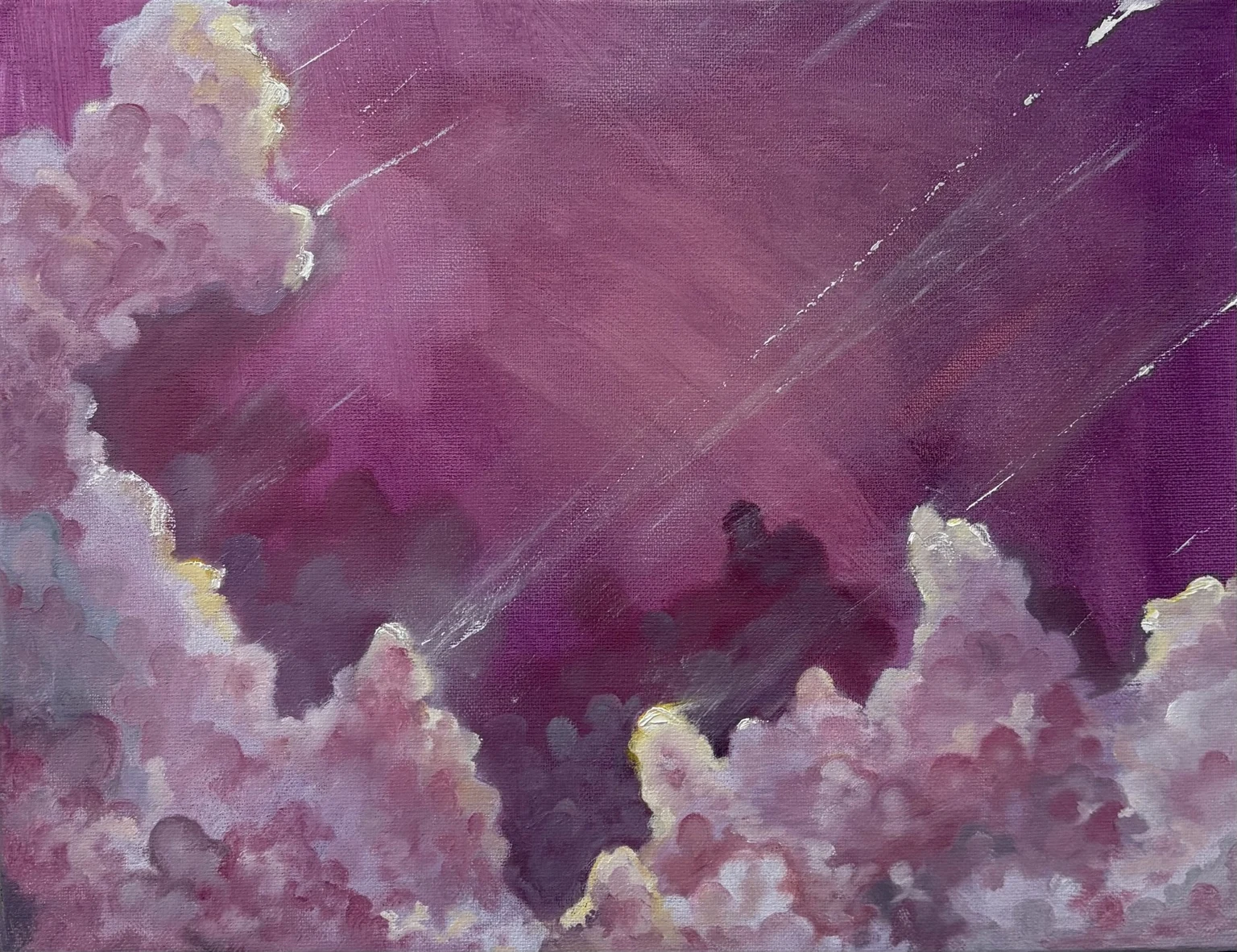
Abstract art may foreground relationships of color and form rather than recognizable objects. If “What is it a picture of?” leads nowhere, ask which parts seem to push apart or pull together. You do not need to invent a story immediately. Naming three visible features is already a way into the work.
Official source · moma.org02Follow rhythm, repetition and color
Move your attention between a crowded cluster of dots and an open area. Does your eye hurry or pause? Look for a repeated shape that changes. Avoid treating a color as a fixed code, such as “red always means anger.” Describe your response to its scale and neighboring colors instead.
03Consider the space of an installation
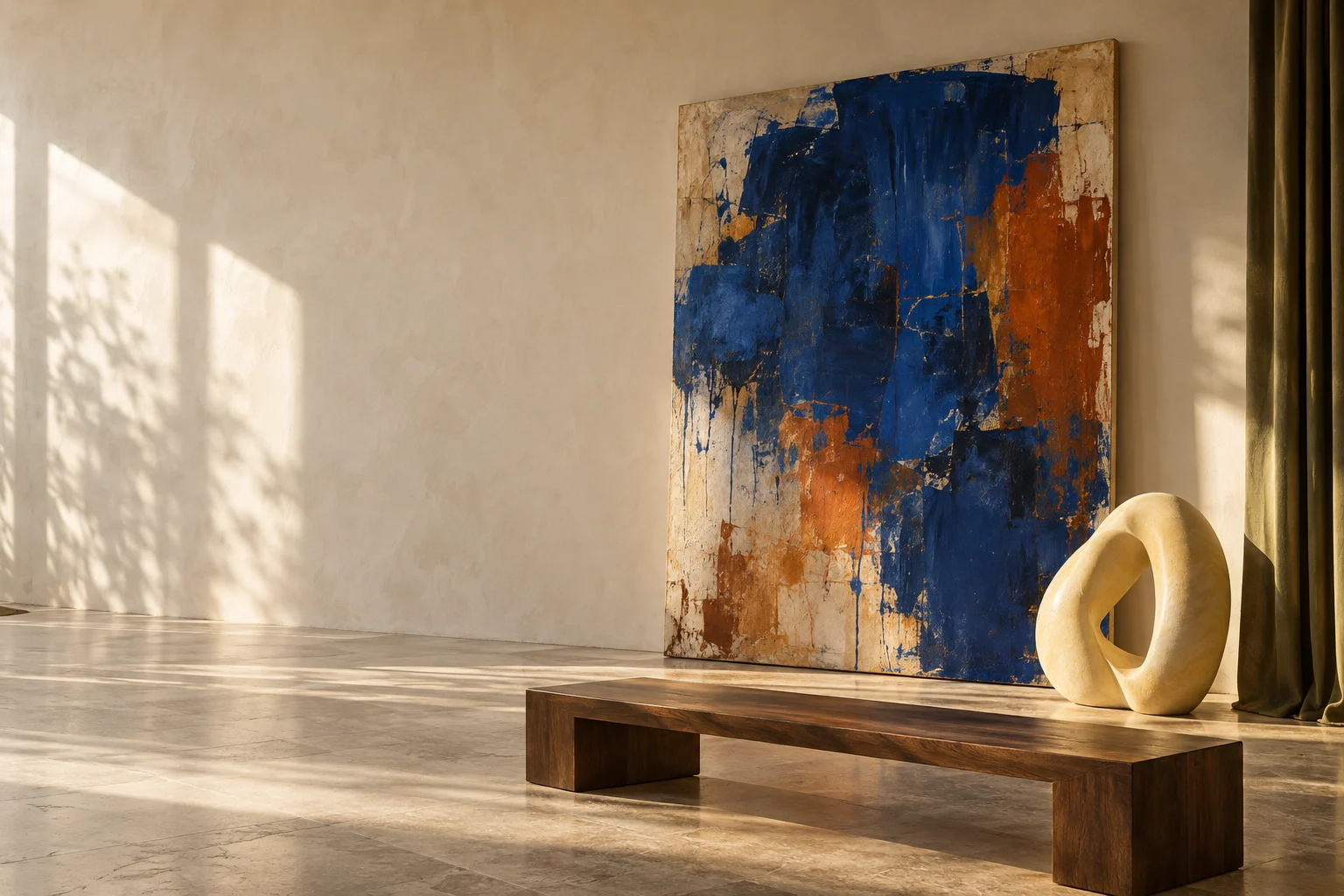
Installation art can make space itself a medium. Compare your view from the entrance with a view farther inside. What changes the experience: light, sound or the distance between objects? A work that looks participatory does not automatically permit touching or entry. Read the venue’s instructions before interacting.
Official source · moma.org04Give moving images and sound some time
Check the stated running time and whether a video loops. If you arrive midway, acknowledge that you may have missed part of it. Follow one element first—sound, subtitles or transitions—instead of trying to grasp everything at once. If you watch only an excerpt, note that limitation in your response.
05Turn uncertainty into a specific question
You do not have to remove a feeling of difficulty or discomfort. Ask “Which moment felt unfamiliar?” or “Why place this object here?” A label does not oblige you to agree with or enjoy the work. At the same time, avoid presenting an unverified intention as something the artist actually said.
06Keep your experience beside the evidence
Write one fact you learned from the description and one question that remains. They need not lead to the same conclusion. Compare your impression before and after reading. This gives you a more useful record than a simple verdict of “I understood it” or “I did not.”
Read next
How to read the small label beside a work
Titles, dates, materials, dimensions and exhibition vocabulary: turn a short label into useful clues.
Read the guide
Getting closer to an artist’s practice
Read statements and bodies of work, ask about the making process, and keep a conversation going beyond one exhibition.
Read the guide